
VAZONE Expert Guide
Industrial License Dubai, UAE
An Industrial License in Dubai is a mandatory permit for businesses engaged in manufacturing, processing, assembling, or packaging goods within the UAE. It allows companies to legally operate industrial facilities, benefit from government incentives, and access local and global markets. With strong infrastructure, supportive regulations, and dedicated industrial zones, Dubai offers one of the most attractive environments for setting up manufacturing operations.

Table of Contents
Industrial License Dubai, UAE – Complete Guide for 2026
Dubai has rapidly evolved into one of the leading industrial and manufacturing hubs in the Middle East. With world-class infrastructure, strategic geographic location, and investor-friendly regulations, thousands of entrepreneurs choose Dubai each year to set up factories, production units, and industrial facilities.
To operate legally, every manufacturing or production-based business must obtain an Industrial License in Dubai. In this comprehensive 2026 guide, we explain requirements, costs, documents, setup process, and the best free zones for industrial activities — along with expert guidance from VAZŌNE Business Setup.
What Is an Industrial License in Dubai?
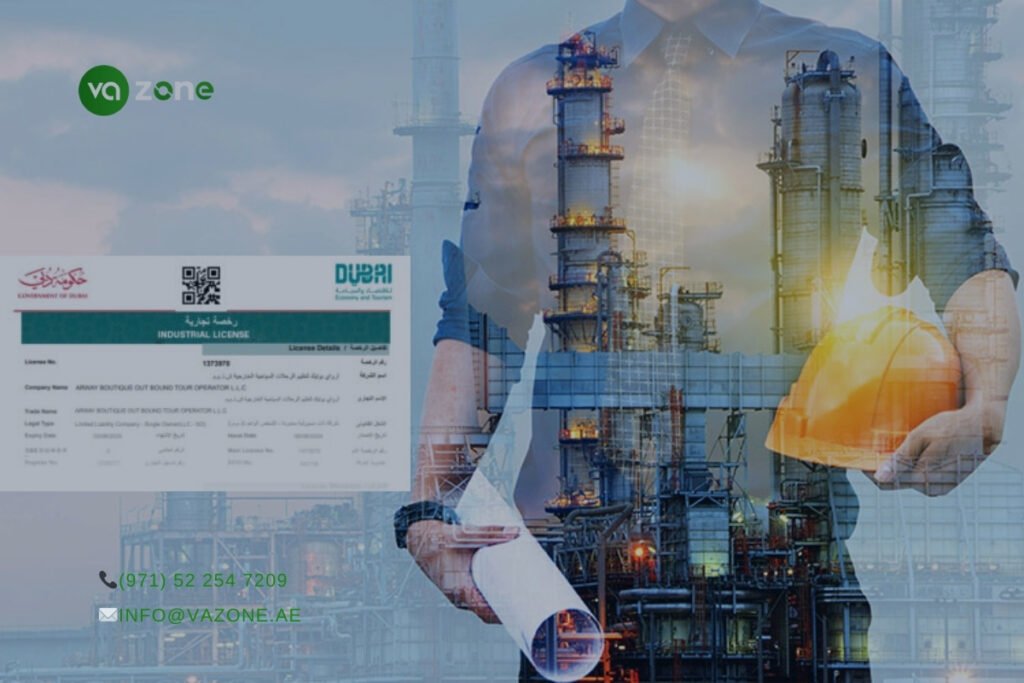
An Industrial License is an official permit issued to companies involved in:
Manufacturing
Processing raw materials
Assembling products
Packaging goods
Industrial fabrication
This license authorizes businesses to produce goods legally within the UAE. It covers both mainland and free zone manufacturing activities.
If your business involves converting raw materials into finished or semi-finished goods, you must obtain an industrial license before starting operations. You can learn more about company formation options at VA Zone Company Setup & Formation.
Why the Industrial License Is Important in the UAE
The industrial sector is central to the UAE’s economic diversification vision. By holding this license, companies gain:
Full legal protection
Access to industrial incentives
Recognition by Dubai authorities
Eligibility for customs duty exemptions
Permission to participate in UAE industrial growth initiatives
The UAE government continues to support manufacturing as part of its “Operation 300bn” strategy, making 2026 a strong year for industrial investors.
Activities Covered Under the Industrial License
The license covers all major industrial operations, including:
1. Manufacturing & Production
Textiles
Food & beverage production
Construction materials
Metal fabrication
Furniture and woodwork
Plastic & chemical production
2. Assembling & Packaging
Equipment assembly
Electronics assembly
Labeling and packaging products
Automotive parts assembly
3. Processing & Industrial Fabrication
Chemical processing
Plastic molding
Machinery production
Metal casting and cutting
Benefits of an Industrial License in Dubai
Access to Local & International Markets
Licensed manufacturers can trade within the UAE and export globally without restrictions.
Lower Import & Export Duties
Industrial companies enjoy reduced customs duties, especially in free zones such as JAFZA and DIC.
Government Incentives
The UAE frequently launches grants, discounts, and funding programs for manufacturers.
Affordable Industrial Land
Businesses can lease industrial land at competitive rates in dedicated industrial zones.
Higher Credibility
Industrial licensing increases trust among clients, investors, and global partners.
To explore all available zones, visit VA Zone – UAE Freezones.
Industrial License Requirements in Dubai
To qualify for an industrial license, the business must meet both basic operational requirements and legal conditions.
Basic Requirements
A physical factory, warehouse, or industrial facility
Compliance with environmental and safety standards
Approval from Dubai Municipality and Civil Defense
Machinery installation plan
Minimum capital investment (varies by activity)
Legal Requirements
The business must be registered as one of the following:
Mainland LLC
Free Zone Company
Industrial Entity within a regulated jurisdiction
For mainland registration, visit Dubai Mainland Company Formation.
Step-by-Step Process to Get an Industrial License in Dubai (2026)
1. Choose the Industrial Activity
Select your exact manufacturing activity as listed by the DET/Free Zone authority
2. Register Company Name & Legal Structure
Reserve a unique trade name and select your structure (LLC, free zone company, etc.).
3. Obtain Initial Approval
Initial approval from DET or the relevant free zone confirms that your business can proceed.
4. Secure Industrial Premises
You must lease:
A warehouse
A factory
Industrial land
Approvals from Civil Defense and the Municipality are required.
5. Submit Documents & Final Approvals
Submit your business plan, agreements, passports, and approvals. Once verified, the industrial license is issued.
Cost of Industrial License in Dubai, UAE (2026)
| Cost Component | Price (AED) |
|---|---|
|
Industrial License Fee |
12,000 – 18,000 |
|
Initial Approval |
1,200 – 1,800 |
|
Trade Name Reservation |
900 – 1,000 |
|
MOA Notarization |
1,500 – 3,000 |
|
Ministry of Economy Industrial Approval |
5,000 – 7,500 |
|
Dubai Municipality Approvals |
2,000 – 5,000 |
|
Industrial Facility Ejari / Lease |
30,000 – 150,000 yearly (depends on size) |
|
Environmental & Civil Defense Inspection |
2,000 – 8,000 |
|
Visa + Establishment Card (Optional) |
3,500 – 5,000 |
Average Industrial License Setup Cost 2026:
➡ AED 25,000 – AED 45,000 (license only)
➡ AED 80,000 – AED 400,000 (with warehouse/factory)
Additional costs include warehouse rent, visas, and accounting needs. You can explore VAT, tax support, and accounting packages at:
Best Free Zones for Industrial License in UAE (2026)
| Free Zones | Perfect for |
|---|---|
|
JAFZA – Jebel Ali Free Zone |
Ideal for export-heavy industries with direct port access. |
|
Dubai Industrial City (DIC) |
Perfect for manufacturing, logistics, and heavy industries. |
|
Sharjah Free Zones |
Affordable industrial land and cost-effective setup. |
|
Ras Al Khaimah (RAKEZ) |
Known for low setup costs and flexible land options. |
|
Abu Dhabi Industrial Zones |
Excellent for large-scale industrial operations with government incentives. |
If you plan to trade physical goods locally or internationally, you may need a General Trading License in Dubai instead of an e-commerce license.
If your business mainly sells products online, a SHAMS E-Commerce License may be a more cost-effective option.
Extended Manufacturing Registration – What It Means
Businesses expanding into new manufacturing categories require extended registration. This includes:
Updating business plans
Obtaining new approvals
Paying additional fees
This is required when scaling production or adding new product lines.
Documents Required for Industrial License in Dubai
Prepare the following documents:
Passport copies of all shareholders
Emirates ID & visa copies (if resident)
Initial approval certificate
Detailed business plan
Memorandum & Articles of Association
NOC from local sponsor (if required)
Lease agreement or Ejari
Environmental, Civil Defense, and Municipality approvals
Board resolution (for corporate shareholders)
Shareholding certificates
Proper documentation ensures faster approval with fewer delays.
Common Challenges in Obtaining an Industrial License
The industrial license application process can be complex, and being aware of potential challenges early on allows investors to plan better and avoid delays.
High Startup Cost
Factory setup, machinery, and warehouse rent can be expensive.
Multiple Approvals
Industrial projects require approvals from several departments.
Land Availability
Finding suitable industrial land in prime zones can be challenging.
Regulatory Compliance
Strict safety and environmental standards must be maintained.
Why Hire Professional Consultants for Industrial Licensing?
Working with experts significantly reduces the risk of delays. VA Zone consultants help with:
Faster approvals
Free zone vs mainland guidance
Cost optimization
Avoiding penalties
Complete documentation support
Explore professional services:
VA Zone Services
Banking Advisory
Business Process Outsourcing
Mainland vs Free Zone Industrial License
| Feature | Mainland Dubai | UAE Free Zones |
|---|---|---|
|
Ownership |
Up to 100% foreign ownership allowed |
100% foreign ownership guaranteed |
|
Market Access |
Full UAE market + international |
Mainly export-focused; UAE trade via distributor |
|
Regulatory Authority |
Dubai DET + Ministry of Economy |
Individual Free Zone Authority |
|
Industrial Land Cost |
Medium to high (depends on area) |
Lower options in DIC, RAKEZ, HFZA |
|
Customs Duty |
Standard UAE customs |
Many free zones offer duty exemptions |
|
Business Flexibility |
High (multiple activities allowed) |
Limited to free-zone-approved activities |
|
Ideal For |
Medium-large factories, local distribution |
Export-oriented manufacturers, SMEs |
|
Visa Quota |
Depends on space & activity |
Depends on facility size; often higher |
Get Your Industrial License in Dubai With VA Zone
Setting up a manufacturing company in Dubai offers long-term growth, access to global markets, and unmatched business stability. However, navigating approvals, documentation, and compliance can be overwhelming — especially for first-time investors.
At VA Zone, we help you with:
End-to-end industrial license setup
Mainland, free zone, and offshore options
Cost-efficient business formation
Visa, tax, and accounting support
Ongoing compliance and expansion guidance
Start your business journey with the UAE’s trusted partner for industrial setups.
Ready to set up your industrial business in Dubai?
Get expert guidance today.
Book a free consultation now