VAZONE Expert Guide
DMCC Free Zone vs Mainland Company Setup in Dubai UAE
DMCC offers 100% foreign ownership, 0% tax on qualifying income, and access to a global commodities and Web3 hub — ideal for international or online-focused businesses. Mainland companies, licensed by Dubai’s DET, can trade freely anywhere in the UAE, bid on government contracts, and scale visas more easily, but require a physical office and pay 9% corporate tax above AED 375,000. The right choice depends on whether your business needs UAE-wide market access (Mainland) or a leaner, internationally focused setup with tax advantages (DMCC).
Get in touch
Table of Contents
DMCC vs Mainland Company Setup in Dubai
Choosing between a DMCC free zone license and a Dubai Mainland license is one of the first — and most consequential — decisions any entrepreneur setting up in Dubai has to make. Get it right, and your structure supports growth for years. Get it wrong, and you may end up paying for a costly restructuring down the line. Here’s a full comparison to help you decide.
What Is DMCC?

The Dubai Multi Commodities Centre (DMCC) is a free zone based in Jumeirah Lakes Towers. It now hosts more than 26,000 member companies from over 180 countries, contributes roughly 7% of Dubai’s GDP, and has been named the fDi Global Free Zone of the Year nine times. It was originally built around the commodities trade — gold, diamonds, tea, coffee — and is also home to one of the region’s earliest crypto and Web3 ecosystems.
Key features of DMCC
- DMCC offers over 900 approved business activities, letting you trade, consult, run e-commerce, or operate in commodities under a single license, with room to add activities as your business evolves.
- 100% foreign ownership with no local sponsor required.
- Companies that qualify as a Qualifying Free Zone Person (QFZP) pay 0% corporate tax on qualifying income, though this requires meeting substance requirements, maintaining transfer pricing, and filing audited financials — non-qualifying income is taxed at the standard 9% rate.
- DMCC also offers dual licensing, which lets a free zone company operate across both the free zone and the UAE mainland, giving access to over 10 million UAE residents.
What Is a Mainland Company?
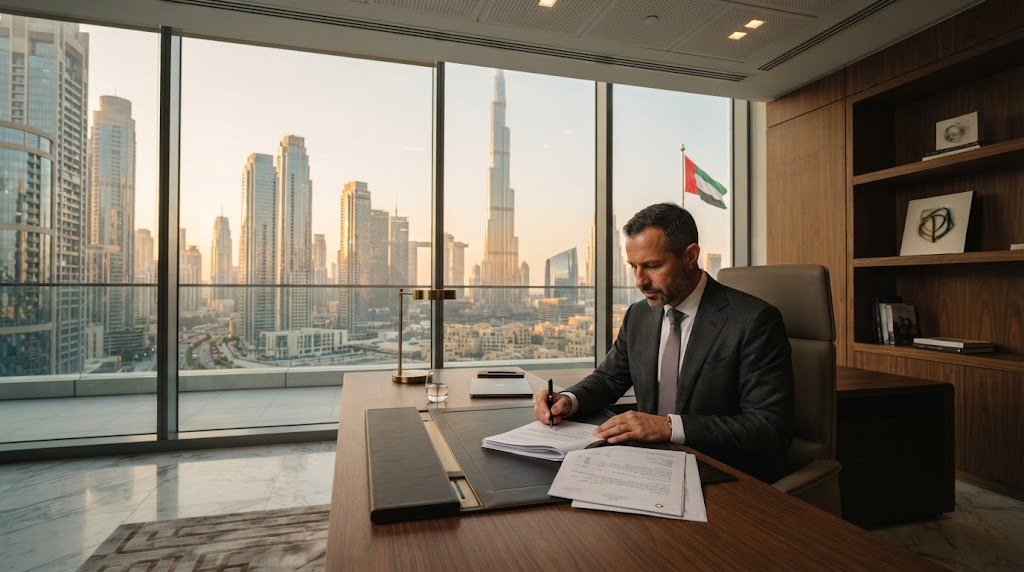
A Mainland company is licensed directly by Dubai’s Department of Economy and Tourism (DET) rather than a free zone authority.
- A Mainland company can trade directly with any customer or business anywhere in the UAE, as well as internationally, without restrictions — since June 1, 2021, most commercial licenses no longer require an Emirati sponsor, making 100% foreign ownership available for over 1,000 approved activities.
- Mainland companies can bid on government contracts, something free zone companies generally cannot do directly.
- Banks often view Mainland companies as more stable, since they operate locally with a real UAE address and Ejari-registered office.
Side-by-Side Comparison
| Factor | DMCC (Free Zone) | Mainland |
|---|---|---|
| Ownership | 100% foreign | 100% for most activities (since 2021) |
| Market Access | Free zone + international; UAE mainland sales may require a distributor or appropriate licence | Anywhere in the UAE, plus international |
| Government Contracts | Subject to applicable eligibility requirements | Eligible subject to government procurement requirements |
| Corporate Tax | 0% on qualifying income, subject to QFZP conditions | 9% on taxable income above AED 375,000 |
| Office Requirement | Flexible options; flexi-desk arrangements may be available | Physical office requirements depend on the licence and activity |
| Visa Quota | Depends on the office package and applicable DMCC requirements | Generally linked to office size and applicable licensing requirements |
| Setup Speed | Approximately 1–3 weeks, depending on the application | Approximately 1–3 weeks, depending on the activity and approvals |
Note: Ownership, tax treatment, office requirements, visa quotas, market access and setup timelines can vary depending on the business activity, licence type, company structure and current UAE regulations. Verify the latest requirements with the relevant authorities before making a business setup decision.
DMCC vs Mainland Company Setup in Dubai Cost Comparison
DMCC:
A DMCC license starts at AED 46,780 in government fees for the one-visa package, with two visas costing AED 57,780 and three visas AED 67,780. Unusually, DMCC’s zero-visa package (AED 49,160) actually costs more than the one-visa package. This is roughly triple the cost of budget free zones like IFZA or Meydan — a premium that’s generally worth it for commodities trading, Web3 businesses, or companies that specifically need the DMCC name for banking and client credibility.
Mainland:
A zero-visa Dubai mainland company typically costs AED 13,900–16,200 in DET and related government fees — trade-name approval (AED 620), initial approval (AED 120), Tasheel (AED 464), MoA typing and notarization (AED 1,200–1,500), and the trade license itself (AED 11,500–13,500). Adding one investor visa brings the total to roughly AED 18,750–21,050. On top of this, office rent (Ejari) is mandatory and can add AED 15,000–40,000+ annually depending on location and size.
Which Should You Choose?
Choose DMCC Free Zone if:
- You run an international, online, or service-based business with limited need to sell directly to UAE consumers
- You’re in commodities, crypto/Web3, trading, or consulting and want DMCC’s specific brand and ecosystem
- You want 0% corporate tax on qualifying income and don’t need a large physical office
- You’re a solo founder or small team that doesn’t need many visas immediately
Choose Mainland if:
- You need to serve clients physically inside the UAE — a shop, restaurant, salon, clinic, or office-based service business
- You want to bid on government contracts
- You need unrestricted access to the entire UAE market without a local distributor
- You expect to scale headcount significantly (visa quota scales more easily with office size)
- You want the banking credibility that comes with a locally licensed, physically present company
A Middle Path: Dual Licensing
DMCC’s dual licensing option lets a free zone company also operate on the UAE mainland, giving businesses that start in the free zone a way to expand into the local market later without a full restructuring. This is worth discussing with a setup consultant if you’re unsure which way you’ll grow.
Bottom Line
There’s no universally “better” option — it depends entirely on where your customers are and how you plan to operate. If your business is international, digital, or industry-specific (like commodities or crypto), DMCC’s ecosystem and 0% qualifying tax rate are hard to beat. If your business depends on physical presence in the UAE market or government work, Mainland is the clearer choice despite the mandatory office and slightly higher tax exposure.
Because government fees, tax rules, and visa quotas change fairly often, it’s worth confirming current figures with DMCC, the DET, or a licensed UAE company-formation consultant before committing.